
How to Choose the Right Web Hosting Company for Your Business Website
Your website is one of your most valuable business assets. Whether you run a company profile, an online store, a hotel website, or a booking platform, choosing the right web hosting provider can significantly impact your website’s speed, security, and reliability.
Many businesses focus on website design but overlook the importance of quality hosting. Unfortunately, even the most beautifully designed website will perform poorly if it is hosted on unreliable servers.
This guide explains what to look for when selecting a hosting company and how to avoid common mistakes.
Table of Contents
Why Your Hosting Provider Matters
Your hosting provider stores your website files and delivers them to visitors whenever they access your site.
A quality hosting provider ensures:
- Fast page loading
- High uptime and reliability
- Strong security
- Regular backups
- Easy scalability
- Responsive technical support
Poor hosting, on the other hand, can result in slow websites, downtime, security breaches, lost sales, and poor search engine rankings.

Understand Your Website Needs
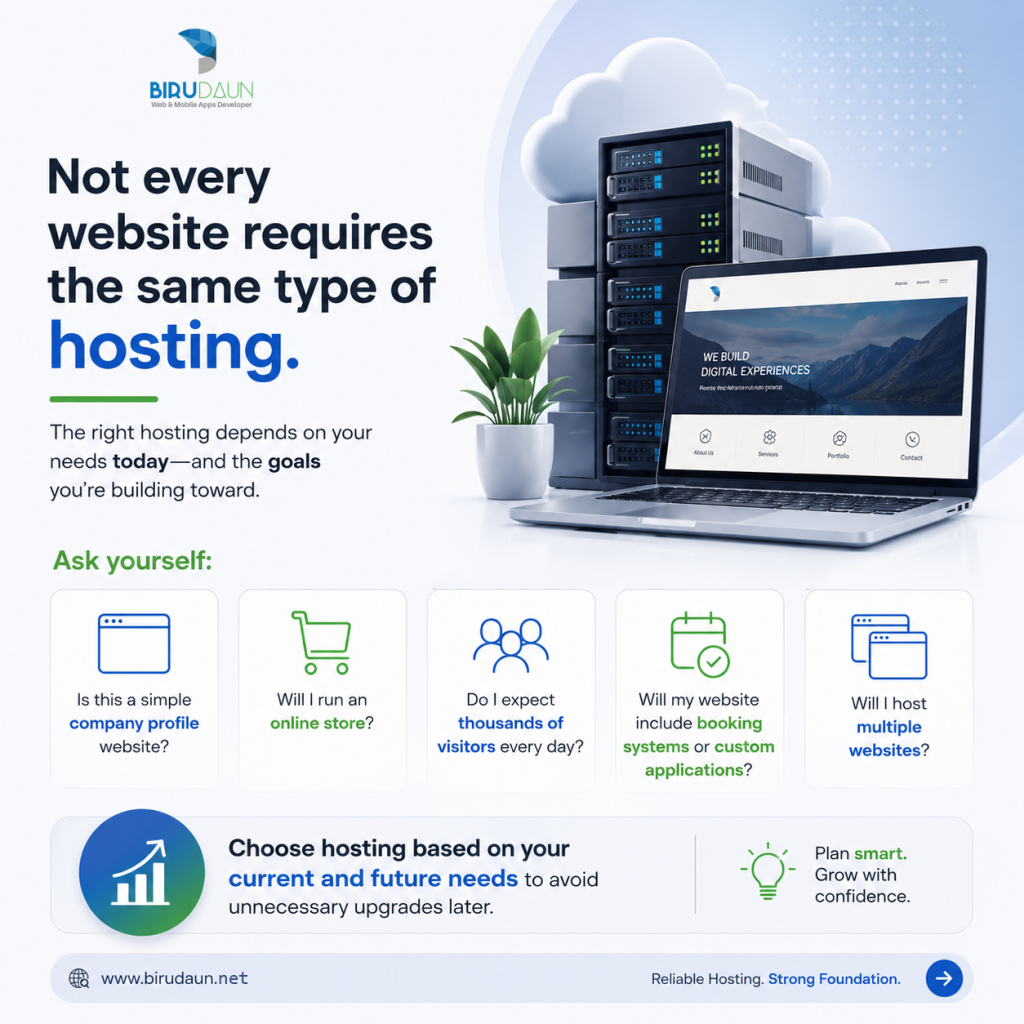
Not every website requires the same type of hosting.
Ask yourself:
- Is this a simple company profile website?
- Will I run an online store?
- Do I expect thousands of visitors every day?
- Will my website include booking systems or custom applications?
- Will I host multiple websites?
Choosing hosting based on your current and future needs prevents unnecessary upgrades later.
Choose the Right Hosting Type
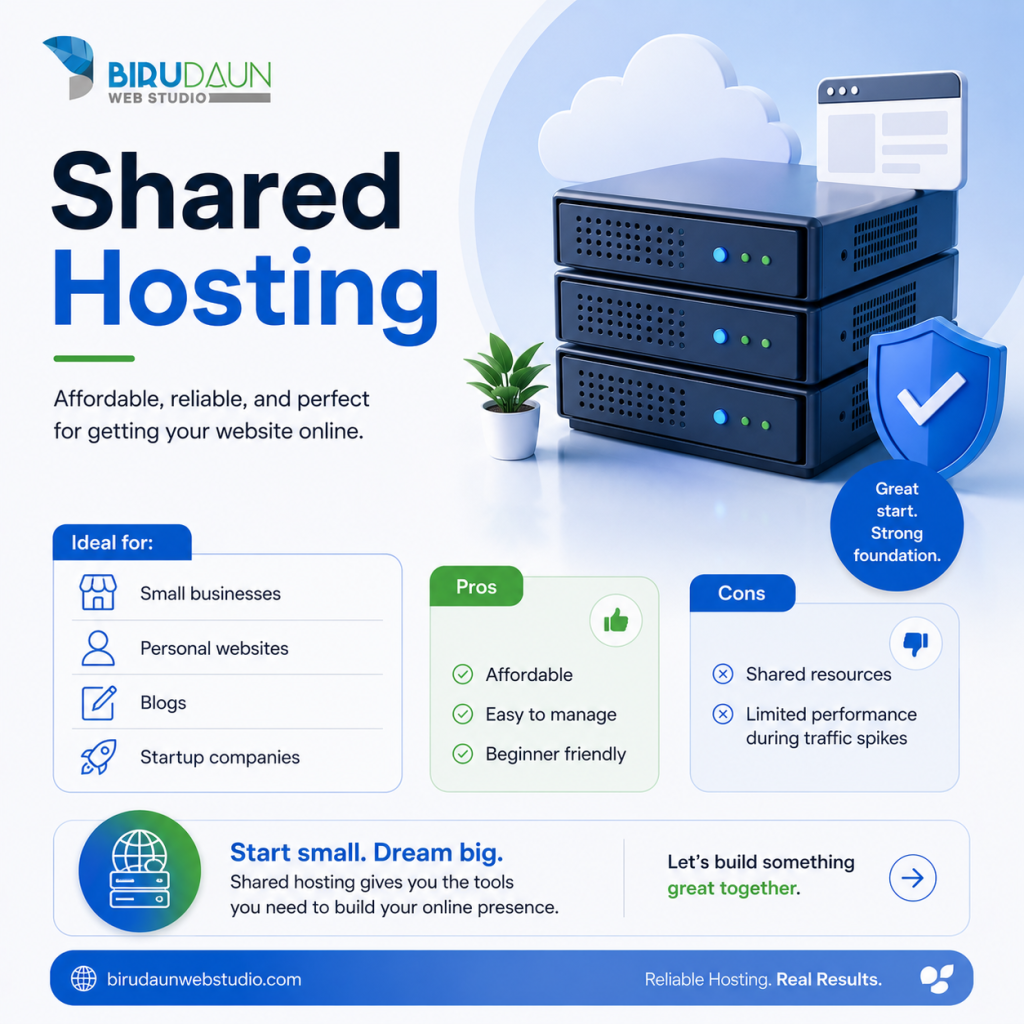
Shared Hosting
Ideal for:
- Small businesses
- Personal websites
- Blogs
- Startup companies
Pros:
- Affordable
- Easy to manage
- Beginner friendly
Cons:
- Shared resources
- Limited performance during traffic spikes
Ideal for:
- Growing businesses
- WooCommerce stores
- Medium traffic websites
Pros
- Better performance
- Dedicated resources
- Greater flexibility
Cons
- Higher cost
- May require server management
Cloud hosting distributes your website across multiple servers, providing excellent reliability and scalability.
Popular examples include providers such as Cloudways, which simplifies cloud hosting management on infrastructure providers like DigitalOcean, AWS, Google Cloud, Vultr, and Linode.
Benefits include:
- High uptime
- Excellent scalability
- Better performance
- Flexible resource allocation
Dedicated Server
Suitable for:
- Large enterprises
- High-traffic websites
- Mission-critical applications
Pros:
- Maximum performance
- Full server control
- Highest security
Cons:
- Highest cost
- Requires experienced administration
Website Speed Matters
Website speed directly affects:
- User experience
- SEO rankings
- Conversion rates
- Bounce rates
Look for hosting providers offering:
- NVMe SSD storage
- LiteSpeed or optimized Apache/Nginx servers
- HTTP/3 support
- Built-in caching
- CDN integration
- Latest PHP versions
A difference of even one second in loading time can significantly impact visitor engagement.
Uptime Guarantee
A hosting company should provide at least:
- 99.9% uptime
- Frequent downtime means:
- Lost customers
- Lower search rankings
- Reduced credibility
- Missed business opportunities
Check whether the provider publishes uptime statistics and has a strong infrastructure.
Security Features
Cybersecurity is no longer optional.
- Choose hosting that includes:
- Free SSL certificates
- Firewall protection
- Malware scanning
- DDoS protection
- Automatic security updates
- Daily or scheduled backups
- Two-factor authentication
A secure website protects both your business and your customers.
Backup and Recovery
Always assume that something can go wrong.
- Reliable hosting should provide:
- Automatic daily backups
- Easy one-click restoration
- Off-site backup storage
- Backup retention for several days or weeks
Without backups, recovering from a server issue or hacking incident can be extremely difficult.
Customer Support
Technical problems don’t always happen during business hours.
Look for providers offering:
- 24/7 support
- Live chat
- Ticket system
- Knowledge base
- Fast response times
Good support can save hours—or even days—of downtime.
Scalability
As your business grows, your hosting should grow with it.
Your provider should allow you to upgrade resources such as:
- CPU
- RAM
- Storage
- Bandwidth
without requiring a complicated website migration.
Server Locations
The closer the server is to your visitors, the faster your website generally loads.
For businesses targeting:
- Indonesia
- Singapore
- Australia
- Southeast Asia
consider hosting providers with data centers in Singapore or nearby regions for lower latency.
Pricing Shouldn't Be Your Only Decision
Many businesses choose the cheapest hosting available.
While budget matters, extremely low-cost hosting often means:
Oversold servers
Limited resources
Slower websites
Poor support
Frequent downtime
Instead of asking, “What’s the cheapest hosting?” ask, “What’s the best value for my business?”
Popular Hosting Providers
Several reputable hosting companies serve different business needs. Examples include:
Hosting.com
Suitable for businesses looking for traditional managed hosting with user-friendly control panels, performance optimization, and a variety of hosting plans.
Best for:
Business websites
WordPress hosting
Small to medium businesses
Cloudways.com
Cloudways is a managed cloud hosting platform that allows businesses to deploy websites on leading cloud providers without managing server infrastructure directly.
Best for:
WooCommerce
Hotels and resorts
Booking systems
High-performance WordPress websites
Growing businesses
Other Well-Known Providers
Depending on your location and requirements, you may also consider providers such as:
Hostinger
SiteGround
Kinsta
DigitalOcean
AWS
Google Cloud
Each offers different strengths in pricing, performance, scalability, and management.
Questions to Ask Before Choosing a Hosting Company
Before making a decision, ask:
- Is SSL included?
- Are backups automatic?
- What is the uptime guarantee?
- Is technical support available 24/7?
- How easy is it to upgrade?
- Are there hidden renewal costs?
- Does the provider offer website migration?
- Where are the servers located?
- Is malware protection included?
- Is hosting optimized for WordPress?
Final Thoughts
Choosing the right hosting provider is an investment in your website’s long-term success. Fast loading speeds, strong security, reliable uptime, and responsive support all contribute to a better experience for your visitors and improved business performance.
Rather than selecting a provider based solely on price, evaluate the overall value, scalability, and technical capabilities. A dependable hosting solution can reduce maintenance headaches, improve SEO, and provide a solid foundation as your business grows.
At BiruDaun Web Studio, we help businesses select the most suitable hosting environment based on their website goals, traffic expectations, and budget. Whether you’re launching a new website or migrating an existing one, choosing the right hosting is one of the most important decisions you can make.